
Commercial Floors Built for Constant Traffic Loads
Commercial epoxy and concrete floor coating in Morristown for shops, warehouses, and service bays where moisture and traffic cause early coating failure
Many commercial buildings in Morristown are older block-and-slab structures where moisture rising through the slab is the primary reason floor coatings fail well before they should. Volunteer Epoxy Flooring handles commercial floor coating work for shops, warehouses, and service bays using a staged process that includes a moisture check before any product is ordered, so the coating system is matched to what the slab is actually doing rather than what it looks like on the surface. The business is family-owned, licensed, and insured, and carries a warranty against moisture vapor on the systems it installs.
Every commercial job begins with a free estimate and a moisture test of the slab. Once the slab's condition is confirmed, the crew grinds the floor to bare concrete using diamond tooling, which removes surface contamination and opens the profile for a mechanical bond. Cracks are repaired at this stage. The coating system is then applied in sequence — base coat, broadcast material if specified, and topcoat — with each layer curing before the next goes down. Work is scheduled around the business's operating hours where possible so production or service operations are not shut down for longer than necessary.
Set up a free estimate at your facility to start with a moisture check and a review of what your floor requires before any coating decision is made.
Skipping a moisture test on a commercial slab and applying a standard coating is the most common reason commercial floor coatings bubble, lift, and delaminate within months of installation. Moisture vapor moving upward through the slab creates pressure between the concrete and the coating that no adhesive can hold against indefinitely. The test determines whether that pressure is within the tolerance of the selected coating system or whether a vapor-specific barrier has to be incorporated into the build-up before the finish coat goes down.
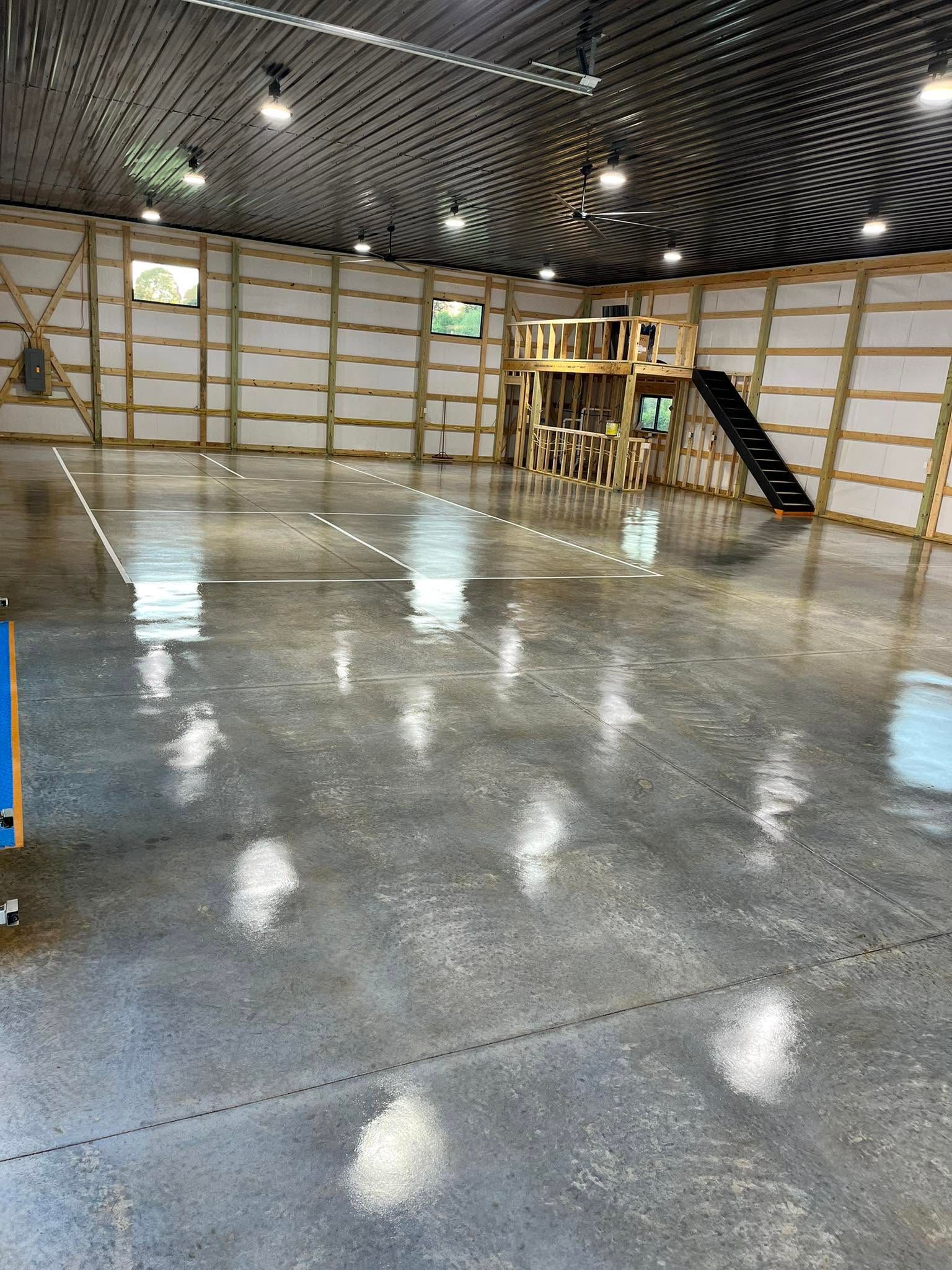
After the system cures, the finished floor is noticeably different from an uncoated slab in ways that affect daily operations. Forklift and cart traffic no longer raises concrete dust, spills sit on the surface rather than absorbing into the slab, and the floor can be cleaned with standard equipment rather than requiring scrubbing to pull contamination out of open concrete pores. Volunteer Epoxy Flooring applies the warranty against moisture vapor to the installed system, which means the moisture check at the start of the job is also the basis for what the finished floor is backed by.
Commercial floor scope varies significantly by facility. A light warehouse with foot traffic has different coating requirements than a service bay with vehicle traffic and fluid exposure. The grinding grit, coating thickness, and topcoat selection are all adjusted to the actual use of the space rather than applied as a single standard product across all commercial jobs. These are decisions made during the estimate and confirmed before materials are ordered.
Answers About How the Work Is Done
The questions below address the process and standards that apply to commercial floor coating projects specifically.
Why does moisture testing happen before the coating is selected rather than after grinding?
The moisture test determines whether the slab's vapor emissions are within the tolerance of a standard coating or whether a vapor barrier system has to be built in first — ordering materials before that test means the wrong system may already be on site when the problem is discovered.
How does diamond grinding prepare a commercial slab differently than sanding or shot blasting?
Diamond tooling removes surface contamination and cuts a mechanical profile into the concrete that gives the coating a surface to grip; the grit of the tooling is selected based on the coating's bond requirements, which vary by product.
What crack repair is done on a commercial floor before coating?
Cracks are filled with epoxy or urethane filler and ground flush before the base coat goes down; skipping this step means cracks will telegraph through the finished coating and eventually become points of delamination under traffic.
How does the crew work around an operating business during a commercial floor project?
Scheduling is arranged during the estimate discussion so the crew can work in sections or during off-hours where the layout allows, keeping portions of the facility accessible during the project.
What does the moisture vapor warranty cover and how is it determined?
The warranty applies to the installed coating system and is based on the moisture readings taken before installation; if the slab tested within the system's tolerance and the coating still fails due to vapor, the warranty applies to that failure.
Volunteer Epoxy Flooring also performs commercial floor coating in Jefferson City, Newport, Rogersville, Greeneville, and Dandridge. To begin with a facility walkthrough and moisture evaluation, contact Volunteer Epoxy Flooring to schedule a free commercial estimate.