
A New Surface Without Replacing the Slab
Concrete overlays in Morristown for worn slabs with sound structure that need resurfacing rather than full replacement
Older slabs with worn, pitted, or discolored surfaces often have perfectly sound structural concrete underneath the damage. Volunteer Epoxy Flooring installs concrete overlays in Morristown as a resurfacing option for exactly these situations, bonding a fresh cementitious layer directly to the existing slab to renew the surface without the cost or disruption of a full pour. The business is family-owned, licensed, and insured, and free estimates are available for every project.
Before an overlay can go down, the existing slab is ground to open the surface and remove any loose material, contamination, or failed coatings that would prevent the new layer from bonding. Cracks are repaired at this stage so they do not telegraph through the overlay once it cures. A bonding layer is applied first, followed by the overlay itself, which is then textured or ground to the desired finish. Once the overlay has cured, coatings, flake broadcast, or stain can be applied on top, making the overlay a foundation step rather than the finished product in many systems.
Arrange a free estimate to review your slab's current condition and determine whether an overlay is the right resurfacing path for your project.
Grinding the slab before the overlay is applied is not optional preparation — it is what makes the bond work. A smooth or contaminated surface gives the overlay nothing to grip, and a layer that is not mechanically bonded will lift in sections under normal foot or vehicle traffic. The grinding step also reveals whether the slab has areas of delamination or soft concrete that need to be addressed before the overlay goes down, rather than discovered after.
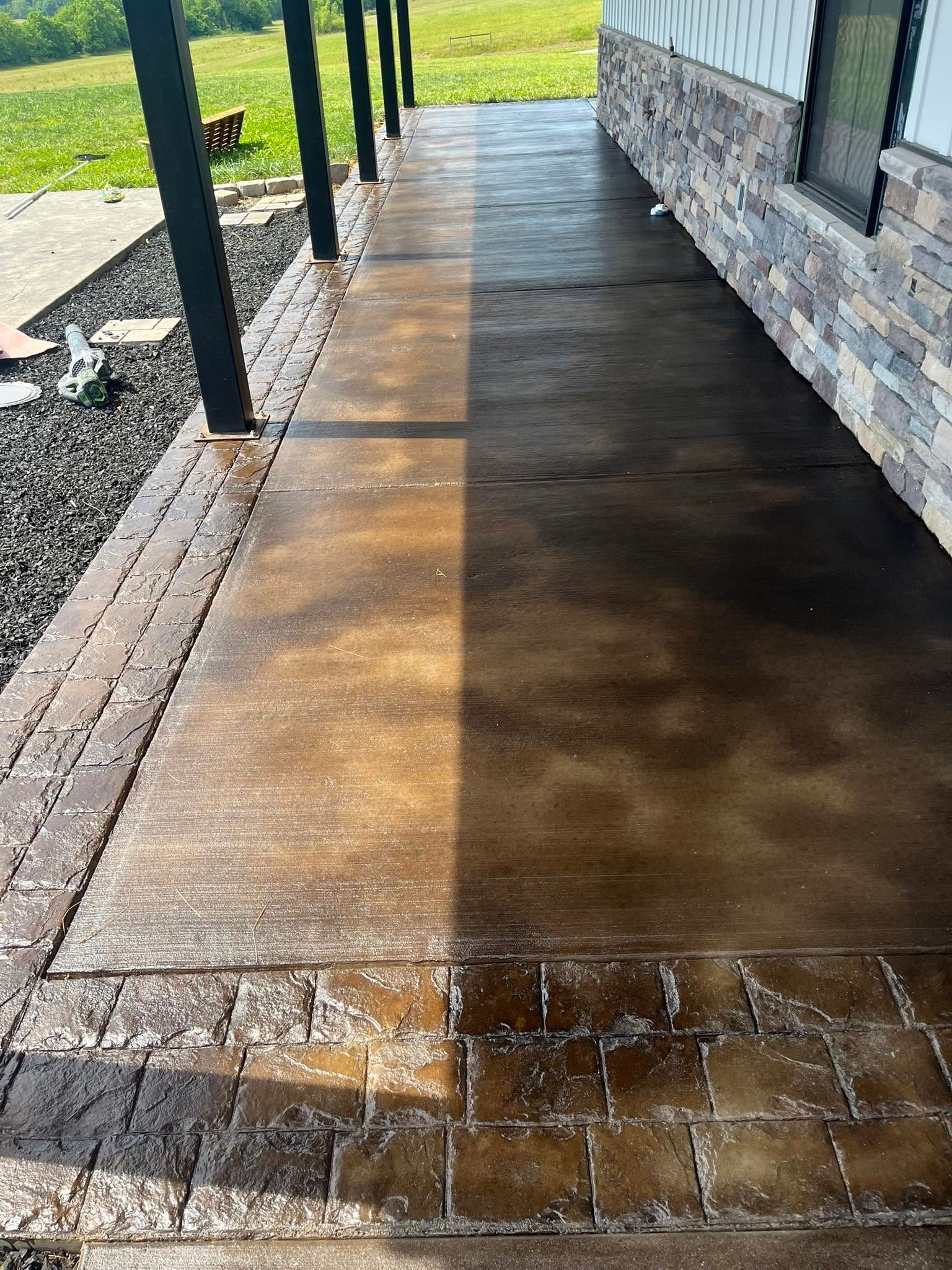
Once the overlay cures and the finish is applied, the floor reads as a continuous surface rather than a patched one. Pitting, spalling, and uneven texture from years of use are no longer visible, and the surface can be finished with color, flake, or texture depending on how the space is used. What changes is not just appearance — the renewed surface is easier to clean and no longer traps contaminants in pits and voids the way a worn slab does.
The condition of the existing slab sets the scope of the project. A slab that is structurally sound but surface-worn is a straightforward overlay candidate. A slab with widespread delamination or active cracking requires more extensive crack repair before the overlay is appropriate. Volunteer Epoxy Flooring evaluates these conditions during the estimate visit so the right system is specified before any materials are ordered or scheduled.
What Property Owners Ask About the Work
The following questions address how concrete overlay installation is sequenced and what affects the process on a specific slab.
What has to happen to the slab before the overlay is applied?
The slab is ground with diamond tooling to open the surface and remove loose material, and any cracks are repaired before the bonding layer goes down — both steps have to be completed in sequence or the overlay will not adhere correctly.
How thick is a typical concrete overlay?
Overlay thickness varies by product and condition, but most cementitious overlays range from a thin skim coat up to roughly three eighths of an inch; the existing slab profile and the intended finish determine which thickness is appropriate.
Why do slabs in Morristown and Newport tend to be good overlay candidates rather than replacement candidates?
Many commercial and residential slabs in this area were poured in earlier construction eras with sound aggregate and depth, but surface wear from decades of use has degraded only the top layer — the structure beneath is solid enough to support a bonded overlay without the expense of breaking out and replacing the full slab.
What finishes can go on top of a cured overlay?
Once the overlay cures, it accepts coatings, flake broadcast systems, stain, or sealer, so the decorative finish is a separate decision from the structural resurfacing step.
How do you confirm the overlay has bonded correctly before applying the topcoat?
A bonded overlay produces a consistent sound when tapped across the surface; hollow spots indicate delamination and have to be addressed before the topcoat is applied or the finished floor will eventually lift in those areas.
Volunteer Epoxy Flooring also installs concrete overlays in Jefferson City, Newport, Rogersville, Greeneville, and Dandridge. To find out whether your slab is a candidate for resurfacing, set up a free estimate with Volunteer Epoxy Flooring and have the surface evaluated before committing to a replacement or a coating-only approach.