
Garage Floors That Hold Up Under Real Use
Residential epoxy flake floors and garage floor coatings in Morristown for home slabs where moisture vapor causes one-day coatings to peel
A coating applied directly to a home slab without grinding or moisture testing will peel — not because the product failed, but because nothing was done to address the two conditions that determine whether a coating bonds. Many homes in Morristown have garages and lower-level floors on slab, including lake and mountain properties where moisture moving up through the pad is the standard failure point for cheaper one-day coating kits. Volunteer Epoxy Flooring installs residential epoxy flake floors and garage floor coatings with a process that starts at the slab condition rather than the finish color, and the work is backed by a warranty against moisture vapor.
Residential work starts with a free estimate at the property, where the crew checks the slab and walks through color, flake, and finish options. The floor is ground with 16-grit diamonds to create a mechanical bond profile, cracks are filled and ground smooth, and then the epoxy base coat goes down. Flake is broadcast into the wet base coat before it sets, which locks the decorative chips into the coating rather than sitting on top of it. The topcoat seals everything in and provides the surface that handles daily traffic. Cured floors are ready for normal use after the cure window the crew specifies at job completion.
Request a free estimate at your property to review the slab condition and walk through the finish options before any work is scheduled.
The 16-grit diamond grinding step is what separates a coating that holds from one that peels at the edges within a season. At that grit level, the concrete surface is opened to a profile that the epoxy base coat can grip mechanically, rather than relying on adhesion alone. The moisture test taken during the estimate visit confirms whether the slab's vapor emissions are within the coating system's tolerance — if they are not, that is addressed before any product goes down rather than after the topcoat has cured.
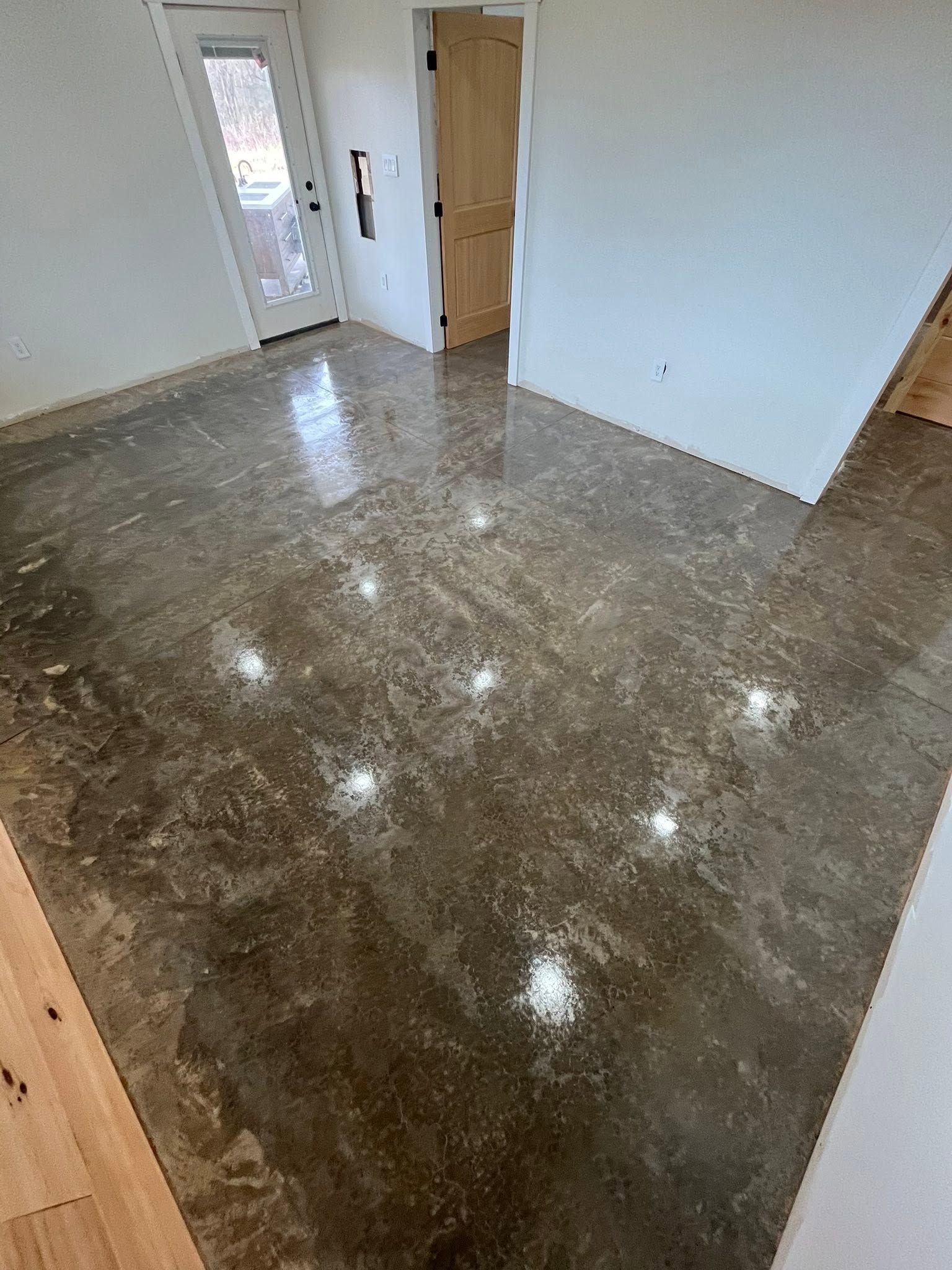
Once the system cures, the garage floor reads as a uniform, continuous surface with the decorative flake locked into the coating. Oil and fluid spills sit on top of the sealed surface and wipe up rather than absorbing into the concrete. The floor no longer produces concrete dust under foot or tire traffic, which is a visible and immediate change from an uncoated slab. Volunteer Epoxy Flooring backs the installed system with a warranty against moisture vapor, which is the warranty that matters for the failure mode most common on home slabs in this area.
Flake size, color blend, and topcoat sheen level are all selected during the estimate visit, so the finished look is confirmed before the floor is ground rather than adjusted after the fact. Homes in Jefferson City and Rogersville with lower-level living spaces or multi-car garages often involve slabs with varying moisture readings across the floor, which affects how the coating system is specified for different zones of the same project.
Questions Before Starting Your Project
The following questions address how residential flake epoxy floor installation is performed and what property owners should understand before the work begins.
What does 16-grit diamond grinding actually do to the slab surface?
It removes the top layer of concrete and cuts a rough profile that gives the epoxy base coat a mechanical surface to grip; a floor that has not been ground to this profile will not hold a coating under vehicle traffic regardless of the product used.
How is flake broadcast into the coating so it stays in place permanently?
Flake is thrown into the wet base coat before it sets, so the chips are embedded in the epoxy rather than applied to a cured surface; the topcoat then seals over them, locking the flake in from both below and above.
What happens if cracks are not repaired before the base coat goes down?
Unfilled cracks will show through the finished coating as lines and eventually become points where the coating lifts, because the edges of the crack flex independently and break the bond at that point.
How does a moisture test during the estimate affect what coating system is specified?
The moisture reading determines whether the slab's vapor emissions fall within the tolerance of a standard epoxy system or whether a vapor-specific primer has to be included in the build-up — without that test, the wrong system may go down on a slab that will push moisture through it.
Why do garage floors on lake and mountain properties near Morristown tend to need more moisture mitigation than standard suburban slabs?
Properties at lower elevations near water or on hillside sites often have slabs in closer contact with groundwater movement beneath the pad, which raises vapor emission levels compared to slabs on well-drained suburban lots, making moisture testing a non-optional step rather than a precaution.
Volunteer Epoxy Flooring also installs residential epoxy flake floors and garage coatings in Jefferson City, Newport, Rogersville, Greeneville, and Dandridge. To move forward, set up a free property visit with Volunteer Epoxy Flooring so the slab can be evaluated and finish options reviewed before any scheduling decisions are made.