
Garage Floors That Bond and Stay Down
Garage floor coating in Morristown for older block and slab garages with failed prior coatings that must be fully removed before a new system will adhere
A garage floor with a peeling, bubbling, or delaminating coating cannot simply be recoated over the failed layer—the new system will fail along the same bond line for the same reason the original coating did. Volunteer Epoxy Flooring coats garage floors in Morristown using epoxy and flake systems built on concrete that has been ground to bare slab, tested for moisture, and repaired where grinding exposes damage. The business is family-owned, licensed, and insured, and every project starts with a free on-site estimate so the slab condition is understood before any material decisions are made.
Older block and slab garages in the Morristown and Jefferson City area frequently have one or more prior coating attempts on them, and those layers have to come off entirely before a new system will bond. The crew grinds the existing coating off to bare concrete, which often reveals cracks or spalling that weren't visible through the old coating. Those repairs are completed before the slab is tested for moisture—and where moisture vapor is present at levels that would compromise a direct coating, a vapor barrier is installed first. The epoxy base, flake broadcast, and topcoat follow once the surface is confirmed sound.
Set up a free walkthrough so the existing coating and slab condition can be assessed before a system is recommended.
The most common reason a garage floor coating fails prematurely is adhesion failure at the concrete interface—meaning the coating never fully bonded to the slab in the first place. Grinding to bare concrete is not optional; it is what creates the mechanical profile the epoxy base coat grips. Any old coating, sealer, or surface contamination left behind produces a weak layer that the new system bonds to temporarily and then separates from under traffic and temperature variation inside the garage.
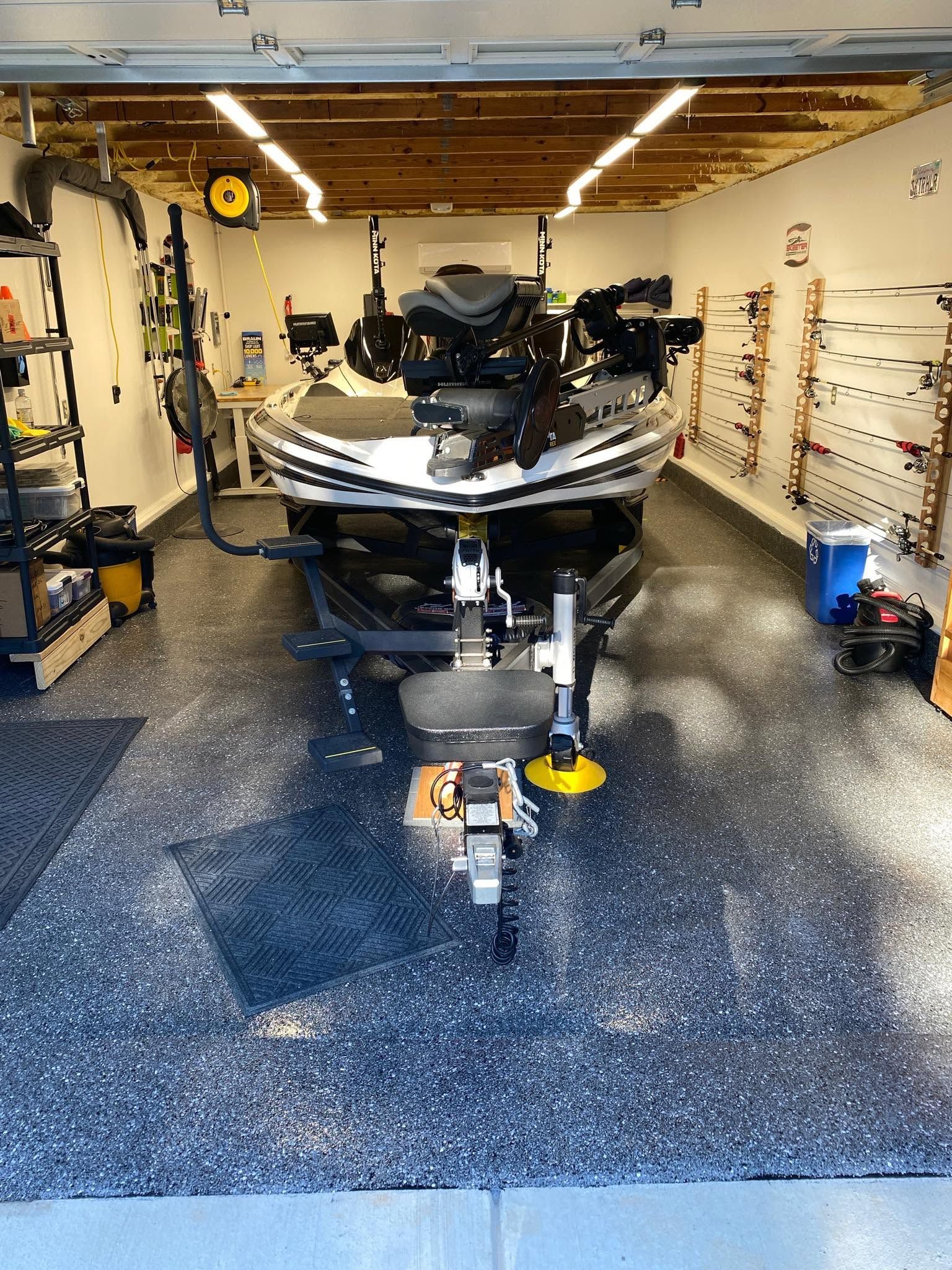
Once Volunteer Epoxy Flooring completes the installation on a properly prepared slab, the visual difference is immediate: the floor has a consistent, flake-broadcast finish with no bare patches, peeled edges, or bleed-through from prior coatings. Fluid spills bead and are wiped up rather than absorbed into porous concrete, and the surface no longer releases dust with foot traffic. The flake layer embedded in the topcoat also adds grip, which matters in a garage environment where wet boots or tires are routine.
The flake broadcast density and topcoat type can be adjusted based on how the garage is used—a light-duty residential garage and a working shop floor that sees tool drops, vehicle fluids, and heavy rolling loads are not the same job, and the system specified should reflect that. These decisions are part of what the on-site review covers before the estimate is written.
Questions About How Garage Floor Coating Works
The following addresses the preparation sequence, material decisions, and what the finished floor looks like—all specific to the coating process itself rather than general business questions.
Why does the existing coating have to be fully removed rather than coated over?
Any coating applied over a failed or partially bonded layer is only as strong as that weak layer below it—the bond line between the old coating and the concrete is where delamination already happened once, and a new system cannot fix that by covering it.
What does grinding expose that you cannot see before the work starts?
Old coatings frequently conceal cracks, spalled areas, and surface irregularities that look fine through the coating but require repair before a new base coat goes down—the grinding step is when the actual slab condition becomes visible.
How does a moisture vapor barrier change the coating sequence?
The barrier coat goes down directly on the prepared concrete before the epoxy base, adding a step and cure time to the process—it is not a shortcut layer but a dedicated product rated for vapor transmission, and it changes the total system thickness as well.
What role does the flake broadcast play in a garage coating system?
Flake is broadcast into the wet epoxy base and then locked under a clear topcoat, which means it is encapsulated rather than sitting on the surface—that makes the finish more durable than a painted surface and adds visual depth that helps hide minor scuffs and wear over time.
How do Morristown-area garages with slab-on-grade construction typically affect the moisture testing step?
Slab-on-grade pours without a sub-slab vapor barrier transmit ground moisture upward continuously, and older garages in this area were commonly poured that way—moisture testing on those slabs often comes back elevated even when the surface looks and feels dry.
Volunteer Epoxy Flooring also coats garage floors in Jefferson City, Newport, Rogersville, Greeneville, and Dandridge. To find out what your slab requires and get a detailed estimate based on its actual condition, call Volunteer Epoxy Flooring at (423) 273-9952.