
Bare Concrete Refined to a Clean Finish
Concrete polishing in Morristown for commercial spaces, retail floors, and finished basements where a smooth, sheen surface is the intended final result
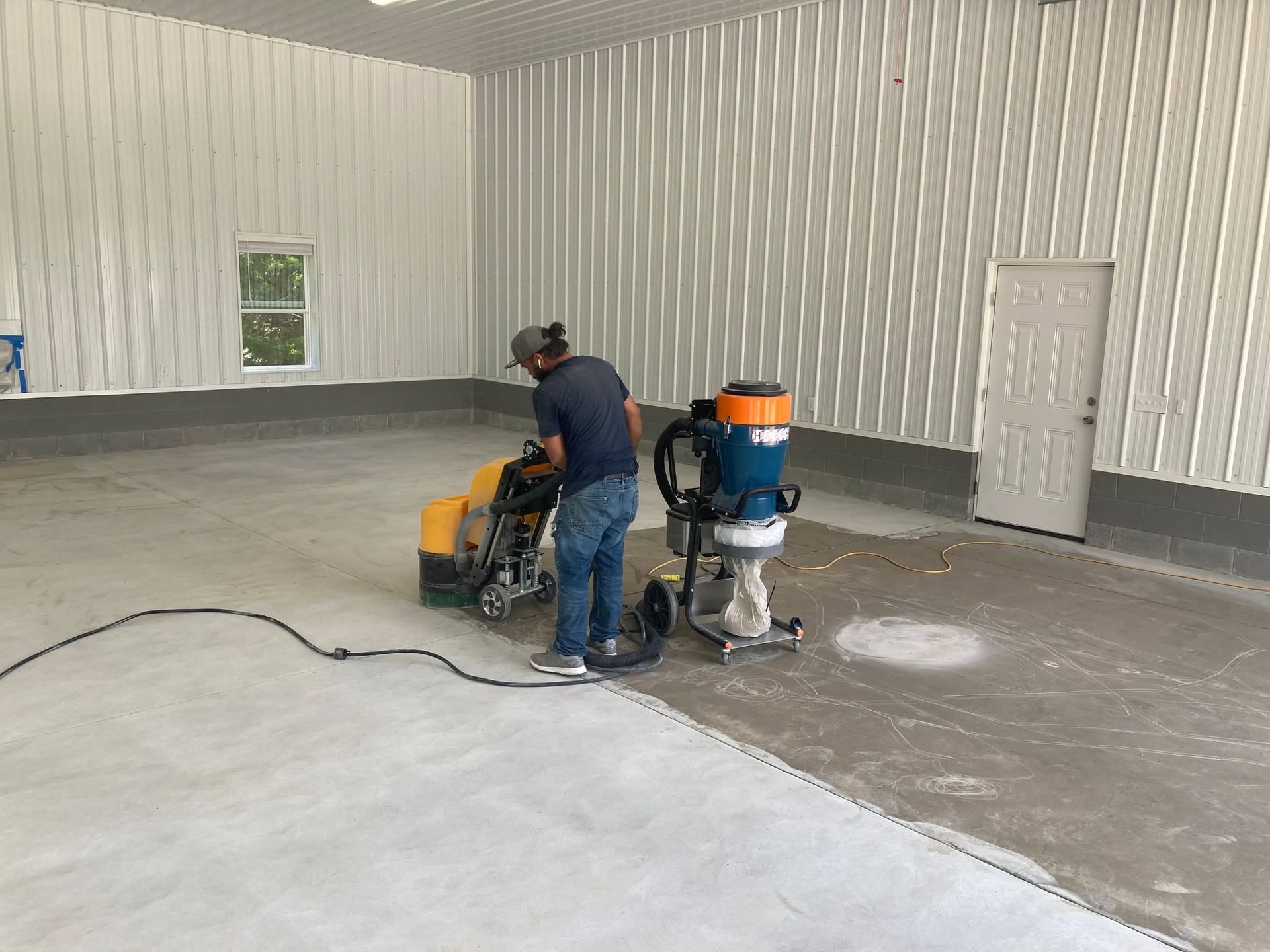
Polished concrete starts as the same raw slab that every other floor coating system begins with—the difference is that polishing refines the concrete itself rather than covering it. Volunteer Epoxy Flooring offers concrete polishing in Morristown as part of its broader floor finishing work, grinding bare concrete through progressively finer diamond grits until the surface reaches the intended sheen level. The service fits commercial storefronts, retail interiors, and finished basements where the look and maintenance requirements of a polished slab are a better match than an epoxy or broadcast system.
The crew addresses cracks and surface defects first, because any irregularity in the slab becomes more visible as the polish level increases—a crack that blends into a rough floor becomes a sharp line in a high-sheen finish. After repairs cure, the slab is ground through a sequence of progressively finer diamond tooling pads, each pass refining the surface further until the target grit level is reached. A densifier or penetrating sealer is applied as the final step, hardening the surface layer and reducing porosity so the polished finish holds up under foot traffic and routine cleaning.
Contact Volunteer Epoxy Flooring to discuss the grit level and finish options that suit your space and intended use.
The grit sequence matters because each diamond pass can only refine the scratches left by the pass before it—jumping grits too quickly leaves visible scratches in the surface that do not polish out at finer levels, and those scratches are permanent once the densifier is applied. The number of passes and the starting grit depend on how rough, damaged, or contaminated the slab is when the job begins. A floor with an old sealer or light coating needs the first grind to cut through that layer before the actual polishing sequence can start.
Once the densifier cures and the final passes are complete, the floor reflects light evenly across its surface and no longer releases dust when swept or blown with a blower. In commercial and retail spaces, the maintenance shift is significant: a polished concrete floor is cleaned with a mop and neutral cleaner rather than scrubbed or resealed on a regular schedule, which reduces the ongoing maintenance commitment compared to coated floors. The finish also holds its appearance under rolling carts, foot traffic, and display equipment in ways that thin paint-on coatings do not.
Polishing works with whatever aggregate and finish is already in the slab—some concrete reveals visible aggregate at higher grind levels, which becomes a design element rather than a flaw. The appearance of the finished floor is influenced by the original concrete mix and how the slab was finished when it was poured, so the specific look of a polished floor varies by slab and cannot be fully predetermined before grinding begins.
What to Ask About Concrete Polishing Before Starting
These questions focus on the polishing process, how slab condition affects the work, and what the finished surface looks like and requires over time.
What determines how many diamond grit passes the floor requires?
The starting condition of the slab sets the coarsest grit needed to open or level the surface, and each subsequent pass uses a finer grit—more surface damage or contamination at the start means more passes before the finish sequence begins.
How does a densifier change the polished concrete surface?
A densifier reacts chemically with the calcium silicate in the concrete to form a harder compound within the surface layer, which closes porosity and makes the floor harder and more resistant to abrasion—without it, the polish wears faster under foot traffic.
Why does crack repair have to happen before the polishing sequence starts?
Cracks are filled and ground flush before the first fine-grit pass because the grinding process will open and widen an unfilled crack rather than polish over it, leaving a more prominent line in the finished floor.
What maintenance does a polished concrete floor require compared to a coated floor?
Polished concrete is maintained with a neutral pH cleaner and periodic reapplication of a guard or sealer depending on traffic—there is no topcoat to peel or recoat, but the densified surface still benefits from a maintenance program suited to the traffic level of the space.
How does the original concrete mix affect the polished finish in Morristown-area commercial buildings?
Older commercial slabs often used a leaner mix with less paste content, which means the aggregate becomes visible at moderate grind levels—in retail and storefront spaces, that exposed aggregate appearance is often considered an asset rather than a limitation of the polishing process.
Volunteer Epoxy Flooring also polishes concrete in Jefferson City, Newport, Rogersville, Greeneville, and Dandridge. To get a free estimate and walk through what the polishing process would involve for your specific slab, call Volunteer Epoxy Flooring at (423) 273-9952.