
A New Floor System Built to Bond and Hold
Floor Installation in Morristown for slabs requiring a durable epoxy system from the ground up
What separates a floor coating that lasts from one that peels within two years starts below the surface, specifically with what the concrete slab is doing with moisture before anything is applied. Volunteer Epoxy Flooring installs new epoxy floor systems for homes and businesses in Morristown, including flake, metallic, and polyaspartic systems, and every installation begins with a moisture test of the slab before any product selection is finalized. The coating choice and whether a moisture vapor barrier is required depend on what that test shows, not on what the floor looks like from above.
Surface preparation uses 16-grit diamond grinding, which cuts into the concrete to create a mechanical profile rather than just cleaning the surface. That profile gives the epoxy physical anchor points across the entire slab, not just chemical adhesion, which is why diamond-ground installations hold under vehicle traffic and heavy equipment in a way that acid-etched or shot-blasted surfaces do not always replicate. Cracks are filled after grinding and before any coating goes down, and where moisture readings call for it, a vapor barrier layer is installed first so the system above it is not undermined from below.
Arrange a free estimate with Volunteer Epoxy Flooring to have your slab moisture-tested and evaluated so the right system is specified for your floor before any installation work begins.
Newer slab-on-grade construction in Morristown is often built with a vapor-permeable pad beneath the concrete, which means moisture movement through the slab is a real variable even on floors that were poured recently. The moisture test is therefore not a formality reserved for older homes; it determines whether the base system needs a vapor barrier coat before epoxy goes down, and skipping it on a new slab carries the same risk as skipping it on a thirty-year-old one. Once the moisture condition is established and the slab is ground and patched, the system is built in coats, with each layer given time to cure before the next is applied.
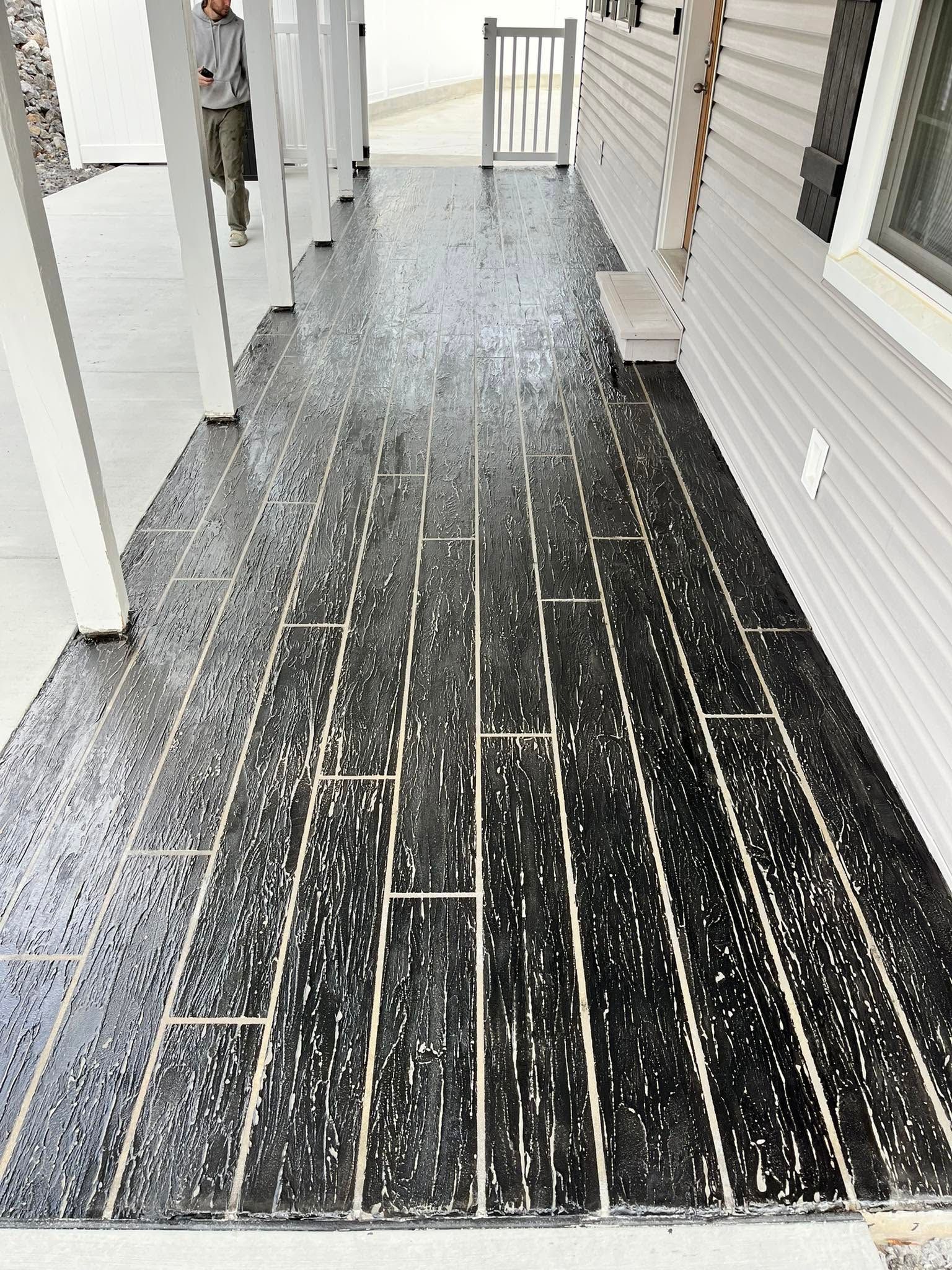
When the installation is finished, the floor presents as a continuous, sealed surface with no open pores or visible aggregate. For a flake system, the broadcast flake is locked under a clear topcoat that also adds slip resistance. For a polyaspartic system, the faster cure chemistry means the floor returns to use sooner than a standard epoxy schedule. What you notice after a properly installed system is that the surface does not absorb oil, resists scuffing from vehicle tires, and cleans with a mop rather than a scrub brush.
Volunteer Epoxy Flooring is a licensed, insured, and family-owned business offering free estimates on all installations. The system recommended for your floor is matched to actual slab conditions rather than defaulted to a single product type, which means two floors in the same neighborhood may be specified differently based on what the moisture test and crack evaluation show.
Answers About How the Work Is Done
The following questions address the installation sequence, the decisions made during the process, and what drives those decisions for concrete floors in residential and commercial settings.
Why does diamond grinding come before any coating is applied?
Sixteen-grit diamond tooling cuts an open profile into the surface of the concrete, giving the epoxy mechanical anchor points rather than relying solely on chemical adhesion. A surface that has only been cleaned or lightly etched does not provide the same bond depth, and the difference shows up under heavy or repeated load.
What does a moisture test actually measure and how does it affect the system chosen?
The test measures how much vapor is migrating through the slab, typically expressed as pounds per thousand square feet per twenty-four hours. Above a threshold specific to the coating being installed, a moisture vapor barrier is applied first so the epoxy system sits on a sealed base rather than on a slab that is still off-gassing.
How are cracks handled during a new installation rather than as a separate repair?
Cracks are filled and ground flush as part of the preparation sequence, after grinding and before the first coat goes down. This order matters because grinding after filling would cut into a repair that has not yet been assessed for depth and width.
What is the difference between a flake system and a polyaspartic system in terms of how they are installed?
A flake system involves broadcasting decorative flake into a wet epoxy base coat, then sealing with a clear topcoat. A polyaspartic system uses a faster-curing resin that compresses the installation schedule, making it practical for commercial spaces that cannot be out of service for multiple days.
How does the age and construction of the slab affect which system gets specified for Morristown homes?
Older slabs poured without vapor barriers beneath them often show higher moisture readings regardless of their visible condition, which pushes the specification toward a system that includes a barrier layer. Newer slab-on-grade construction with permeable pads can behave similarly, so the moisture test is run on every slab regardless of age.
Volunteer Epoxy Flooring also installs new epoxy floor systems in Jefferson City, Newport, Rogersville, Greeneville, and Dandridge. To confirm which system fits your slab and get a written estimate at no cost, contact Volunteer Epoxy Flooring directly at (423) 273-9952.