
Cracks and Peeling That Compromise the Whole Surface
Floor Repair in Morristown for cracked, peeling, and coating-failed concrete slabs
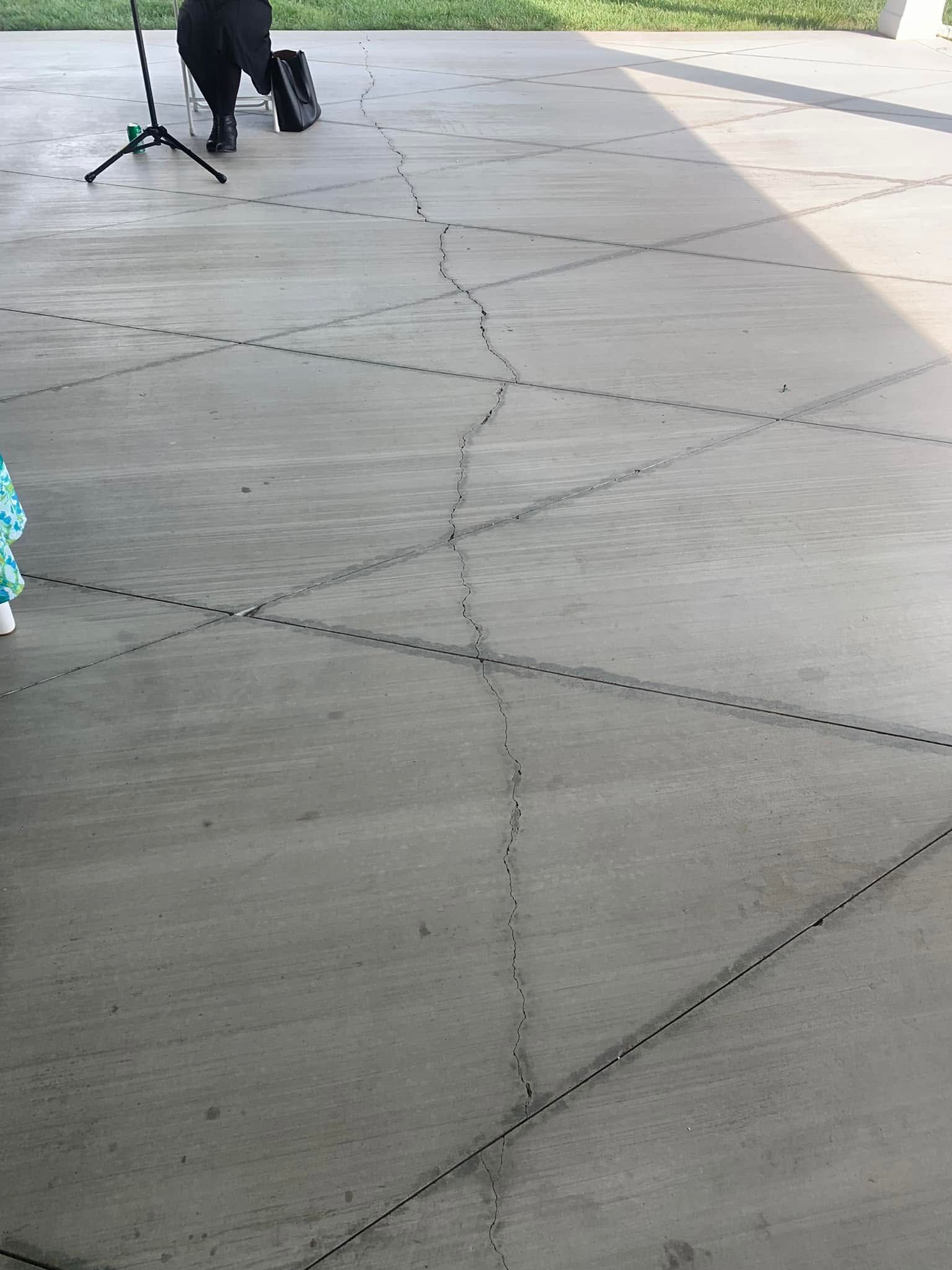
Older block and slab construction in Morristown's established neighborhoods carries decades of load pressure and moisture migration from below, and those conditions show up in floors as widening cracks, lifting coatings, and sections where previous repairs have let go. Volunteer Epoxy Flooring repairs cracked, peeling, and damaged epoxy and concrete floors for homeowners and businesses in Morristown, addressing the structural surface before any new material goes down. The distinction matters because a patch applied over a failed surface bonds to the failure, not the slab, and will separate again under the same conditions.
Every repair begins with grinding out the damaged section rather than filling over it. Cracks wider than one eighth inch are ground open, cleaned, and filled with epoxy or urethane crack filler, sometimes with rod or sand introduced into larger voids for stability, then ground smooth before any coating is applied. Hairline cracks are evaluated against the flooring system being installed, because some systems bridge fine cracks without filler and filling them unnecessarily can introduce a different failure point.
Schedule a free on-site evaluation with Volunteer Epoxy Flooring to assess the extent of the damage and determine the right repair approach for your specific slab condition.
The reason many floor repairs fail within a year or two is that they treat the visible damage without addressing why the surface broke down. Grinding out the affected area removes not just the crack but also any delaminated or contaminated concrete around it, so the filler and subsequent coating make contact with sound material throughout. This mechanical preparation is the same first step used in a full installation, which is why a well-executed repair holds up the same way a new coating does in the surrounding area.
Once the repair is complete and the filler is ground flush, the patched sections are indistinguishable in profile from the rest of the slab. A coating applied over the repair area blends across the transition, so what you see when the work is finished is a continuous surface rather than a visible patch. The floor no longer catches debris in the crack, no longer shows a raised edge where vehicles roll over it, and no longer allows moisture to channel through the slab at that point.
Volunteer Epoxy Flooring is a licensed, insured, and family-owned business, and the repair process is scoped specifically to what the concrete actually needs rather than a standard package applied regardless of conditions. Larger structural separations are approached differently than surface delamination, and the filler material selected depends on whether the crack is still active or has stabilized.
What Property Owners Ask About the Work
The questions below address how floor repair is actually performed, what drives the decisions made during the job, and what you can expect to see once the work is finished.
What determines whether a crack needs filler before a new coating?
Crack width and whether the crack is still moving are the two key factors. Cracks wider than one eighth inch are ground out and filled regardless of the system going over them; hairline cracks are evaluated against the coating being applied, since some systems span fine cracks without filler and adding it can create a different surface transition.
How is damaged or delaminated epoxy removed before the repair starts?
The failed coating and any compromised concrete beneath it are ground away using diamond tooling, which cuts back to sound material rather than just abrading the surface. This step is not optional because filler applied to contaminated or soft concrete will not hold.
Why do some repaired areas look different from the surrounding floor after patching?
Surface profile differences between the filler and the original slab can cause a slight variation in sheen if the repair is not ground flush before coating. Grinding the filled area smooth and level with the surrounding concrete eliminates that visible line when the topcoat goes over it.
How does the age of a slab in Morristown's older neighborhoods affect how a repair is scoped?
Slab-on-grade and block basement floors built several decades ago were often poured without modern vapor barriers, so moisture pressure from below contributes to ongoing crack movement. The repair scope accounts for whether the crack is still active, because an active crack requires a flexible filler rather than a rigid one.
What should a finished floor repair look like when the work is complete?
The repaired sections should sit flush with the surrounding slab, with no raised edges or visible voids. Once a coating is applied over the repair area, the transition should read as a continuous surface rather than a visible patch.
Volunteer Epoxy Flooring also performs floor repair in Jefferson City, Newport, Rogersville, Greeneville, and Dandridge. To get a clear picture of what your slab needs, request a free estimate and walk through the repair scope with someone who will be doing the work directly.