
Floors Designed as a Visible Interior Feature
Metallic Finishes in Morristown for open living spaces and finished garages where the floor is part of the design
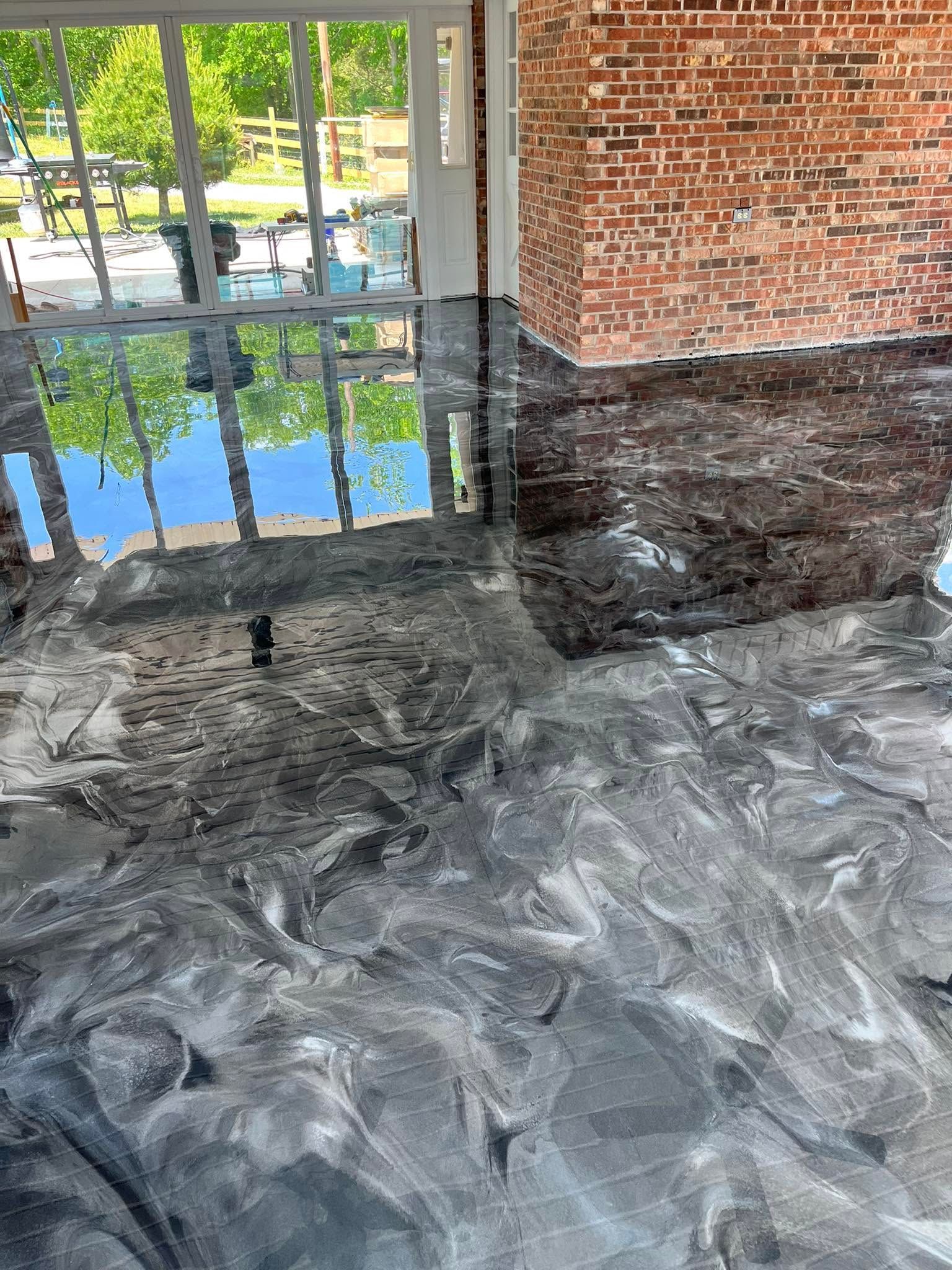
Homes in Morristown with open living areas and finished garages are increasingly using metallic epoxy floors as a design feature rather than a utility surface, and the swirling, pearlescent pattern of a metallic finish makes that choice legible the moment someone enters the space. Volunteer Epoxy Flooring installs metallic epoxy floors in Morristown, layering metallic pigments into an epoxy base to create a pattern that moves and shifts with light in a way no painted or tiled floor replicates. The visual result depends entirely on the structural preparation beneath it, because a metallic finish applied over a slab that was not properly ground or moisture-checked will lift, and no pattern survives delamination.
The installation sequence begins with grinding and crack filling, followed by a moisture check before any product is applied. Metallic pigments are layered into the epoxy base coat and manipulated while the material is workable to produce the swirling pattern specific to each installation. Because the pigments move in the wet coat, no two metallic floors are identical, and the final pattern is influenced by application technique as much as by the color or pigment combination selected. A clear topcoat is applied once the base has cured, which locks in the pattern and provides the surface durability the floor needs under furniture, foot traffic, and regular cleaning.
Arrange a free estimate with Volunteer Epoxy Flooring to review pigment options and confirm what your slab preparation requires before installation is scheduled.
The swirling, lobe, and cell patterns in a metallic epoxy floor are produced by how the installer works the pigmented coat while it remains open, using tools and movement to direct how the metallic particles orient in the material. This is not a stamped or printed surface—it is the result of technique decisions made in real time as the epoxy cures, which means the installer's control during application directly determines what the floor looks like when it sets. Pigment combinations also interact in the wet coat, so the final appearance of a two-color metallic pour is not simply the sum of its two colors.
Once the topcoat is applied and cured, the metallic pattern beneath it is fixed and visible through a gloss surface that reflects ambient light and shifts the perceived depth of the floor. The finished floor reads differently under different lighting conditions—under overhead fixtures it presents as a high-gloss, dimensional surface; under natural sidelight, the metallic particles catch and hold the angle of the light in a way that emphasizes the pattern. Maintenance involves nothing more than mopping with a neutral cleaner, because the sealed topcoat prevents fluids and debris from reaching the pigment layer below.
Volunteer Epoxy Flooring is a licensed, insured, and family-owned operation. Pigment color and combination are selected before installation, and the team can walk through what different combinations tend to produce on the finished floor so the choice is made with a clear understanding of the likely outcome rather than based on a color chip alone.
What Property Owners Ask About Metallic Epoxy
The questions below cover how metallic epoxy floors are built, what drives the appearance of the finished pattern, and how the installation process compares to other epoxy systems.
How are the swirling patterns in a metallic epoxy floor created?
The installer works the pigmented base coat while it is still open using application tools and directed movement, which causes the metallic particles to orient into the swirling and lobe shapes visible in the finished floor. The pattern is not pre-set or stamped—it forms in real time during application and sets permanently as the coat cures.
Why must the slab be ground before a metallic epoxy system is applied?
Diamond grinding cuts a mechanical profile into the concrete surface, giving the epoxy base coat physical anchor points rather than relying on surface-level adhesion. A metallic floor applied to an unground or poorly prepared slab carries the same delamination risk as any other epoxy system, and the decorative finish does not survive a coating failure beneath it.
How does moisture in a Morristown slab affect a metallic epoxy installation specifically?
Metallic pigments are suspended in the same epoxy chemistry used in standard systems, so the moisture risk is identical: vapor pressure from a slab that was not checked or treated can lift the coating from below regardless of the decorative layer above. The pre-installation moisture check determines whether the system needs a vapor barrier layer before the metallic coat goes down.
What does the clear topcoat do to the metallic pattern once it is applied?
The topcoat locks the metallic pattern in place by covering the pigmented base coat with a sealed, abrasion-resistant layer. It also adds the gloss depth that makes the metallic finish appear three-dimensional rather than flat, and it protects the pigment layer from scuffing, chemical exposure, and moisture during cleaning.
How should a finished metallic floor be maintained without damaging the topcoat?
Mopping with a neutral pH cleaner is the standard maintenance approach—no stripping, waxing, or solvent-based products are needed or recommended. The sealed topcoat prevents cleaning products from reaching the pigment layer, so regular mopping is sufficient to keep the surface clean and preserve the visual finish.
Volunteer Epoxy Flooring also installs metallic epoxy floors in Jefferson City, Newport, Rogersville, Greeneville, and Dandridge. To review pigment options and get a free written estimate for your space, call (423) 273-9952 and set up a time for an on-site evaluation.