
Stained Concrete That Reads as a Finished Floor
Concrete staining and sealing in Morristown for slab floors with uneven color or surface contamination that affects how stain takes
Concrete staining is not a predictable process applied the same way to every slab. The existing concrete — its age, patch history, and whether it has absorbed oil or other contaminants — determines how the stain will take and where color variation will appear. Volunteer Epoxy Flooring stains and seals concrete floors in Morristown as a combined service, always running a test patch on the actual slab before the full floor is committed, so the color and sealer appearance are confirmed on that specific concrete rather than estimated from a sample card. The business is family-owned, licensed, and insured, with free estimates available for every project.
The process begins with a free estimate and a condition review of the slab. The crew grinds and cleans the concrete to remove surface contamination and open the pores for even stain penetration. A test patch is run before the full application, which shows how the stain color will actually appear on that concrete and how the sealer will finish over it — older slabs in areas like Greeneville and Dandridge frequently have uneven color from past patches or oil absorption that the test patch reveals before the whole floor is stained. Cracks are repaired first so the stain finish reads evenly across the surface. The sealer is applied in coats over the stained floor, completing the job as a single, sequenced service.
Set up a free estimate to have your slab assessed and a test patch run so you can see the actual stain result before the full floor is done.
Running a test patch before staining the full floor is the step that prevents the most common staining problem: committing the entire floor to a color and finish that reacts differently than expected on that particular slab. Concrete that has been patched, sealed previously, or contaminated with oil will absorb stain at a different rate than the surrounding area, producing a blotchy finish that becomes permanent once the sealer goes over it. The test patch identifies those zones before any stain is applied to the full surface.
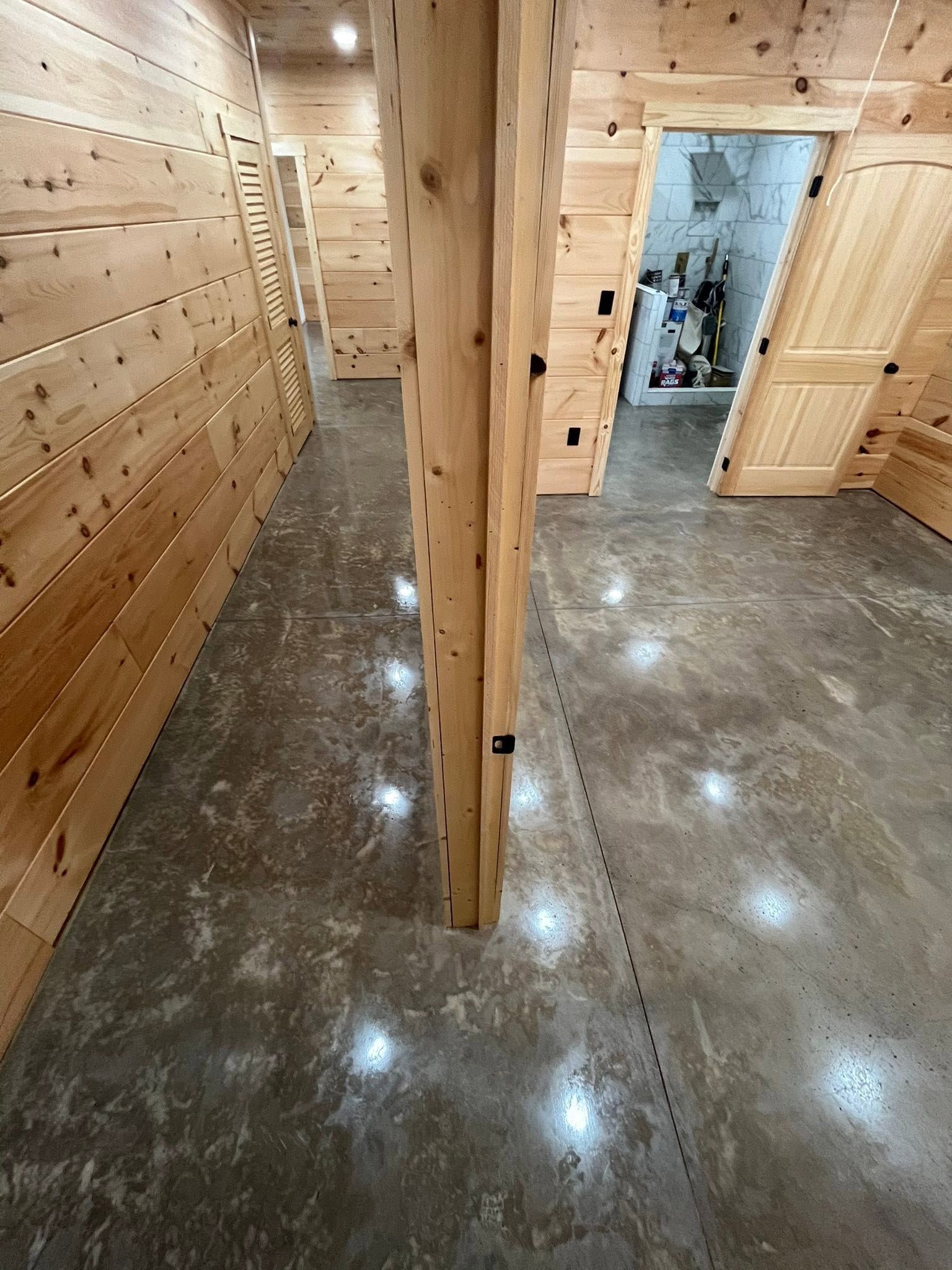
Once the full floor is stained and the sealer is applied in coats, the surface has a consistent, finished appearance that bare concrete cannot achieve. The sealer protects the stain from wear and surface abrasion, and the floor becomes easier to maintain — spills do not penetrate, and the surface can be cleaned without stripping the color. What disappears after the job is the uneven, porous appearance of the raw slab; what remains is a surface that holds its color and reads as an intentional finish rather than a utilitarian floor.
Stain color is selected during the estimate process, with the test patch serving as the final confirmation rather than the color chart alone. The sealer sheen level — matte, satin, or gloss — is also a choice made before the job is scheduled, since different sheens read very differently on a stained concrete floor than they do on a product label. Volunteer Epoxy Flooring sequences the crack repair, staining, and sealing as one job so the surface is not handed off between steps.
Common Questions About This Service
The following questions address how concrete staining and sealing is performed and what affects the outcome on an existing slab.
Why does a stained concrete floor always need sealing as part of the same job?
Stain penetrates the concrete but does not protect it from surface wear or spill absorption; without a sealer applied over it, the color will dull and erode under foot traffic, which is why staining without sealing is not a complete service.
How does grinding before staining affect the color result?
Grinding opens the concrete pores evenly and removes surface contamination that would block stain penetration in irregular patterns; a slab that is not ground before staining will show blotchy absorption wherever the surface is sealed or contaminated.
What does the test patch reveal that a color chart cannot?
The test patch shows how that specific concrete absorbs the selected stain — including how patched areas, old oil stains, and prior sealer residue affect color uptake — which is information that only comes from running the product on the actual slab.
How are cracks handled before the stain is applied?
Cracks are repaired and ground flush before staining begins so the filler reads as a consistent surface under the stain; an unfilled crack will hold stain differently than the surrounding concrete and show as a dark or light line in the finished floor.
How many coats of sealer typically go over a stained floor and what does each coat accomplish?
Most stained floors receive two to three coats of sealer, with each coat adding film thickness that protects the stain layer from abrasion; the final coat is what determines the sheen level and the surface's resistance to everyday use.
Volunteer Epoxy Flooring also stains and seals concrete floors in Jefferson City, Newport, Rogersville, Greeneville, and Dandridge. To confirm your slab is a good candidate and see a test patch result before committing to a full floor, arrange a free estimate with Volunteer Epoxy Flooring at your property.